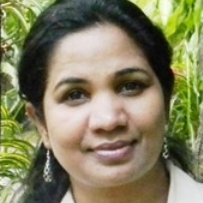
Dr. Mrinal Sarvagya is a Professor in the School of Electronics and Communication Engineering. She received her PhD degree in Wireless Communication from IIT Kharagpur, her MTech degree in Digital Communication (course work from IIT Kanpur) from DAVV Indore, and her BE degree in Electronics and Communication Engineering from Govt. Engineering College Ujjain. She received the best thesis award from IIT Kharagpur in 2009 for her thesis titled “QoS based packet scheduling and resource allocation schemes for WCDMA UMTS”. She is a member of professional bodies WIE and IEEE. She has 20 years of teaching experience, teaching subjects including Wireless Communication, Advanced Digital Communication, Computer Communication and Networking, Real-Time Operating Systems, Ad Hoc Wireless Networks, and Protocol Engineering. Her research interests include Wireless Communication, channel equalization in OFDM-IDMA/SCM receivers, and Cognitive Radio Networks. She served as Principal Investigator for VGST Karnataka “Zero padding OFDM signals for Cognitive Radio Networks” (2012-2014) and for IEEE Hyderabad “Multimedia Communication over Fibre Optical link” (2012), exhibited at Birla Science Museum Hyderabad. She is currently Principal Investigator for a sponsored project from the Naval Research Board, Ministry of Defence, India (2015), and served as Principal Investigator for the project titled “Attitude determination of Ship in floating dry dock” sponsored by ISRO, India (2019). Her name is included in Marquis Who’s Who in the World directory from 2007 onwards. She has received many awards, including the Young Research Scientist award from VGST Karnataka in 2013 and the Bharat Jyoti Award from the International Friendship Society of India. She received the Outstanding Faculty in Engineering Award from the Venus International Foundation, India, in 2017, and the Best Researcher Award 2020 from REVA University. She has more than 105 publications in international journals and conferences, and is a selection panel member for the Association of Commonwealth Universities fellowships, UK.