Work place: Computer Science and Engineering, Saveetha School of Engineering, Saveetha Institute of Medical and Technical Sciences (SIMATS), Saveetha University, Chennai, Tamil Nadu, India
E-mail: amanhaniya12@gmail.com
Website:
Research Interests:
Biography
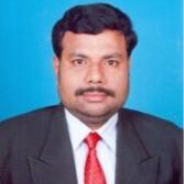
Amanullah is the Professor, the Department of Computer Science and Engineering at the Saveetha School of Engineering, Saveetha Institute of Medical and Technical Sciences, Saveetha University (SIMATS) in Chennai. He earned his Ph.D. degree from Vinayaka Missions University, Salem, Tamil Nadu in 2015 and completed his M.E. degree in Computer Science & Engineering at Anna University, Chennai in 2007. With over 23 years of experience in teaching, research, and administration across various autonomous institutions and engineering colleges, Dr. Amanullah is a lifetime member of the ISTE. His research interest includes Machine Learning, Medical Image Processing, and Soft Computing.
By Kodukulla Aruna Gayatri Amanullah S. A. Kalaiselvan
DOI: https://doi.org/10.5815/ijcnis.2026.04.08, Pub. Date: 8 Aug. 2026
In recent years, AUV-assisted underwater sensor networks (AUV-UWSNs) have gained significant attention due to their ability to monitor and collect crucial data from the oceanic environment. However, efficiency of these networks has hindered certain issues which include energy consumption problems, low communication range and rational routing/ clustering problems. Two of the major challenges affecting other aspects of AUV-UWSNs are the lack of a proper way to choose the right cluster heads and guarantee sound data transmission. This paper proposes a high-efficiency clustered routing technique that tackles these problems by utilizing the Spider Wasp Optimizer (SWO) for optimal cluster head selection and the Deep Fuzzy Gorilla Troops Self-Guided Generative Adversarial Clustering Network (DFGTS-2GACN) for efficient data transmission. The SWO enhances the choice of cluster heads with respect to energy consumption and the DFGTS-2GACN applies deep learning and fuzzy logic control to facilitate data forwarding in the network with enhanced performance. Experimental performance shows 99% improvement compared with the existing methods. In this paper, an effective method to consider for increasing the data transfer rate while decreasing the energy consumption plus increasing the life cycle of the underwater network facilitated by the AUV in the underwater sensor networks is discussed, thus providing a viable solution to the problems of underwater communication.
[...] Read more.Subscribe to receive issue release notifications and newsletters from MECS Press journals