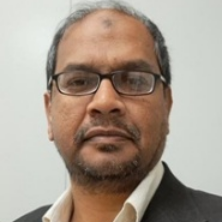
Abdul Khader Jilani Saudagar

Work place: Information Systems Department, College of Computer and Information Sciences, Imam Mohammad Ibn Saud Islamic University(IMSIU), Riyadh, Kingdom of Saudi Arabia

E-mail: saudagar.jilani@gmail.com

Website:

Research Interests:

Biography

Dr. Abdul Khader Jilani Saudagar received the B.E., M.Tech, and Ph.D. degrees in computer science and engineering, in 2001, 2006, and 2010, respectively. He is currently working as an Associate Professor with the Information Systems Department, College of Computer and Information Sciences (CCIS), Imam Mohammad Ibn Saud Islamic University (IMSIU), Riyadh, Saudi Arabia. He is also the Head of the Intelligent Interactive Systems Research Group (IISRG), CCIS. He has more ten years of research and teaching experience at both undergraduate (UG) and postgraduate (PG) level. He has published a number of research papers in international journals and conferences. His research interests include artificial image processing, information technology, databases, and web and mobile application development. He is associated as a member with various professional bodies, like ACM, IACSIT, IAENG, and ISTE. He is working as an editorial board member and a reviewer for many international journals.
Author Articles
A Novel Hybrid Model for Brain Tumor Analysis Using Dual Attention AtroDense U-Net and Auction Optimized LSTM Network

By S. K. Rajeev M. Pallikonda Rajasekaran R. Kottaimalai T. Arunprasath Nisha A.V. Abdul Khader Jilani Saudagar

DOI: https://doi.org/10.5815/ijisa.2026.01.04, Pub. Date: 8 Feb. 2026

Timely identification of brain tumors helps improve treatment outcomes and reduces mortality. Accurate and non-invasive diagnostic tools for segmenting and classifying tumor regions in brain MRI scans are crucial for minimizing the need for surgical biopsies. This study builds a deep learning model for tumor segmentation and classification, aiming high accuracy and efficiency. A gaussian bilateral filter is used for noise reduction and to improve MRI image quality. Tumor segmentation is performed using an advanced U-Net model, the Dual Attention AtroDense U-Net (DA-AtroDense U-Net), which integrates dense connections, atrous convolution and attention mechanisms to preserve spatial detail and improve boundary localization. Texture-based radiomic features are subsequently extracted from the segmented tumor  
region using Kirsch Edge Detector (KED) and Gray-Level Co-occurrence Matrix (GLCM) and refined through feature selection to reduce redundancy using the Cat-and-Mouse Optimization (CMO) algorithm. Tumor classification employs an Auction-Optimized hybrid LSTM Network (AOHLN). Evaluated on BraTS 2019 and 2020 datasets, the developed model achieved a Dice Similarity Coefficient of 0.9907 and a Jaccard Index of 0.9816 for segmentation accuracy and an overall accuracy of 98.99% for classification, highlighting its potential as a dependable and non-invasive diagnostic solution.

[...] Read more.
Other Articles