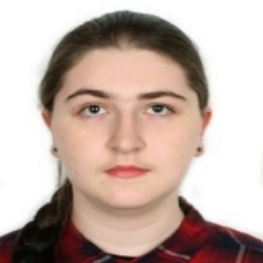
Sofia Chyrun
Work place: Telecommunication Department, Lviv Polytechnic National University, Lviv, 79013, Ukraine
E-mail: sofiia.chyrun.sa.2022@lpnu.ua
Website:
Research Interests:
Biography
Sofia Chyrun is a student at the Telecommunication Department at Lviv Polytechnic National University. Her main research interests are fake identification, natural language processing, computer linguistics, data science, web technologies, data science, system analysis, information technologies, machine learning, Cisco Systems, information systems and networks, and cyber security.
Author Articles
Information Technology for VR Training Evaluation with First Aid Skills Improvement to Detecting Human Resource Damage in Emergencies based on Behavioural Methods
By Sofia Chyrun Victoria Vysotska Lyubomyr Chyrun Dmytro Uhryn Zhengbing Hu Yurii Ushenko
DOI: https://doi.org/10.5815/ijigsp.2026.02.10, Pub. Date: 8 Apr. 2026
Traditional first aid preparation methods often fail to reproduce realistic stress levels and to simulate visual difficulty in identifying lesions in critical situations. In emergencies, delays in recognising injuries or errors in protocols result in critical losses of human resources. The use of computer graphics and virtual reality technologies enables you to create a safe yet highly realistic environment for rescuers to test and improve their skills. The article presents an integrated methodological framework for assessing the effectiveness of VR first-aid training in conditions of damage to civilian infrastructure. The main focus is on developing mathematical models and algorithms to identify and evaluate the quality of rescuers' actions by analysing digital interaction signals in a virtual environment. A composite efficiency indicator is proposed that combines normalised parameters for reaction time, manipulation accuracy, stress level, and immersion. The work aims to formalise a mathematical model to assess the effectiveness of VR training in developing skills for lesion identification and first aid provision, using quantitative metrics. The study aims to identify statistically significant differences in learning speed and skill retention between groups using VR simulations and traditional methods. The project aims to validate innovative content creation methods, including mobile photogrammetry, to visualise damaged infrastructure and victim models. The study used a comprehensive approach that includes mobile photogrammetry and generative neural networks to create a library of 3D assets with varying degrees of detail. Performance score is based on composite indicator that integrates normalised data on reaction time, manipulation accuracy, error count, immersion rate. Linear mixed models, exponential approximations, and bootstrap estimation of effect stability were used to analyse hierarchical data and individual learning trajectories. The experimental part includes the use of mobile photogrammetry and generative neural networks to create realistic 3D models of affected environments and identify types of injuries (bleeding, burns, unconsciousness). To analyse the dynamics of learning and maintaining skills, models with mixed effects and exponential forgetting curves are used. The results confirm that the use of VR technologies provides a statistically significant acceleration in the development of automated skills for lesion identification and assistance compared to traditional methods. The proposed approach is a scalable tool for preparing civil and rescue services to act in critical situations. Experimental data showed that the integral performance score in the VR group increased from 0.42 0.10 to 0.76 0.08, while in the control group it increased from only 0.40 0.09 to 0.55 0.10 (p < 0.001). The largest effect was observed in the bleeding arrest scenario, where the effect size (Cohen's d) reached 2.3. The analysis of forgetting curves confirmed the superiority of VR: the skill loss rate in the VR group was 0.25, providing knowledge retention 1.8 times longer than in the control group (0.45). The study confirmed that VR simulations significantly accelerate the formation of automated behaviour patterns and reduce reaction time in extreme conditions. The proposed mathematical assessment model provides objective feedback and standardisation of the rescue training process. The results indicate the high practical value of introducing such tools into training programs for civilian and military structures to minimise losses in real emergencies.
[...] Read more.Intelligent Application for Textual Content Authorship Identification based on Machine Learning and Sentiment Analysis
By Dmytro Uhryn Victoria Vysotska Lyubomyr Chyrun Sofia Chyrun Cennuo Hu Yuriy Ushenko
DOI: https://doi.org/10.5815/ijisa.2025.02.05, Pub. Date: 8 Apr. 2025
During the development and implementation of the software system for text analysis, attention was focused on the morphological, syntactic and stylistic levels of the language, which made it possible to develop detailed profiles of authorship for various writers. The main goal of the system is to automate the process of identifying authorship and detecting plagiarism, which ensures the protection of intellectual property and contributes to the preservation of cultural heritage. The scientific novelty of the research was manifested in the development of specific algorithms adapted to the peculiarities of the natural language, as well as in the use of advanced technologies, such as deep learning and big data. The introduction of the interdisciplinary approach, which combines computer science, linguistics, and literary studies, has opened up new perspectives for the detailed analysis of scholarly works. The results of the work confirm the high efficiency and accuracy of the system in authorship identification, which can serve as an essential tool for scientists, publishers, and law enforcement agencies. In addition to technical aspects, it is vital to take into account ethical issues related to confidentiality and copyright protection, which puts under control not only the technological side of the process but also moral and legal norms. Thus, the work revealed the importance and potential of using modern text processing methods for improving literary analysis and protecting cultural heritage, which makes it significant for further research and practical use in this area.
[...] Read more.Agile Intelligent Information Technology for Speech Synthesis Based on Transfer Function Approximation Methods Using Continued Fractions
By Lyubomyr Chyrun Victoria Vysotska Sofia Chyrun Zhengbing Hu Yuriy Ushenko Dmytro Uhryn
DOI: https://doi.org/10.5815/ijigsp.2025.02.01, Pub. Date: 8 Apr. 2025
The study considers the methodology of using continued fractions to approximate transfer functions in speech synthesis systems. The main results of the research are an increase in the accuracy of approximation, acceleration of calculations, and a new method of convergence analysis. The use of continued fractions allowed for a reduction in the error of approximation of transfer functions compared to classical methods. With an error of 1.0E-06, the continued fraction method requires only 3–13 terms, while the power series requires 3–15 terms. The use of continued fractions reduced the time for calculating transfer functions by 2–3%. It was determined that the most effective for calculating the values of continued fractions are the Δ-algorithm and the α-algorithm. A new criterion for the convergence of continued fractions is proposed, which allows the sum fractions that are "divergent" in the classical sense. The graphs used to classify different types of continued fractions allowed us to better understand their structure and potential for application in speech synthesis. Software for calculating transfer function values based on continued fraction decomposition has been developed and tested. It has allowed automation of the approximation process and increased the efficiency of speech synthesis systems. The results obtained have allowed improving the quality of synthesised speech while simultaneously reducing the complexity of calculations. Systems using continued fractions consume less memory and provide more accurate voice reproduction. In summary, the work presents a new approach to the approximation of transfer functions, which is essential for optimising speech synthesis systems.
[...] Read more.Other Articles
Subscribe to receive issue release notifications and newsletters from MECS Press journals