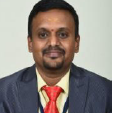
Work place: Department of Information Science & engineering, The National Institute of Engineering, Mysuru, 570018, India
E-mail: sudeep@nieit.ac.in
Website:
Research Interests: Blockchain technology, Internet of Things
Biography
Prof. Sudeep J received his Bachelor of Engineering in Information Science and Engineering from Coorg Institute of Technology, Ponnampet, affiliated to Visvesvaraya Technological University, Belgaum, Karnataka, and obtained his Master’s Degree in the area of Software Engineering from Sri Jayachamarajendra College of Engineering, Mysore, autonomous under Visvesvaraya Technological University, Belgaum, Karnataka. His research interests include Internet of Things, Cyber Security and Blockchain technologies. He has published research papers in various international conferences and journals. At present he is working as Assistant Professor in the Department of Information science and Engineering at NIE Institute of Technology, Mysuru, Karnataka, India.
By Pradeep B. M. Sudeep J Shivashankara S Pavithra D R Ananth G. S.
DOI: https://doi.org/10.5815/ijeme.2026.03.02, Pub. Date: 8 Jun. 2026
One of the effects of the rapid adoption of the cashless policy in Nigeria and the introduction of new naira notes is operational difficulties among financial institutions, which have led to a significant increase in ATM card theft and fraud among clients. Absence of real-time analysis of access points, combined with the intermittent and simultaneous quality of fraudulent dealings, are two major factors that make conventional fraud detection systems fail regularly. Towards reducing ATM fraud, this paper will present a high-performance, intelligent based, AI-based model to integrate three factors of biometric authentication, spending pattern analysis, and password verification into a three-factor model. Results of experiments based on real banking data prove that the proposed solution is superior to traditional models in terms of accuracy, precision, recall, and F1-score. The model uses an optimized Bi -Directional Long Short-Term Memory (BiLSTM) network to analyze historical ATM transaction records and identify behavioral abnormalities that could point to fraud. A Cuttlefish Optimization (MCFA) algorithm that is based on mapping is used to fine-tune the parameters, thus improving the reliability and accuracy of the classification. Biometric verification combined with behavioral modeling using AI stands out as a scalable and dependable framework of minimizing ATM card fraud and instilling confidence within the banking industry.
[...] Read more.By Prasanna Kumar G. Shankaraiah N. Rajashekar M B Sudeep J Shruthi B S Darshini Y Manasa K B
DOI: https://doi.org/10.5815/ijwmt.2024.01.03, Pub. Date: 8 Feb. 2024
Researchers have developed an innovative approach to ensure seamless connectivity in ubiquitous networks with limited or irregular network coverage. The proposed method leverages advanced network technologies and protocols to seamlessly establish and maintain network connections across various environments. It integrates multiple wireless communication technologies and dynamic network selection algorithms, overcoming issues like poor reliability, limited scalability, and security problems. Compared to existing solutions, the method exhibits improved connection handover efficiency, network throughput, and end-to-end delay. Considering user mobility, network availability, and quality of service needs, it makes informed decisions about the most suitable network connections. The proposed method is expected to significantly impact the development of future ubiquitous networking solutions.
[...] Read more.Subscribe to receive issue release notifications and newsletters from MECS Press journals