Work place: Department of Computer Science & Engineering, Sri Jayachamarajendra College of Engineering, Mysuru, India
E-mail: shivashankar.research@gmail.com
Website:
Research Interests: Data Structures and Algorithms, Image Processing, Computer Architecture and Organization, Pattern Recognition, Computer systems and computational processes
Biography
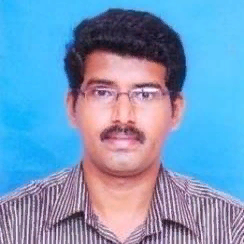
Shivashankara S, Research Scholar at Sri Jayachamarajendra College of Engineering, Mysuru (Visvesvaraya Technological University, Belagavi), India. Born on April 29, 1980. B.E (2005), M.Tech (2008) from Visvesvaraya Technological University, Belagavi, India. Lecturer (2005), Asst. Prof. (2011) of Computer Science and Engineering. He has published 3 scientific papers in international and national journals and conference proceedings. The main research interests include Image Processing and Pattern Recognition, and Machine Learning.
By Pradeep B. M. Sudeep J Shivashankara S Pavithra D R Ananth G. S.
DOI: https://doi.org/10.5815/ijeme.2026.03.02, Pub. Date: 8 Jun. 2026
One of the effects of the rapid adoption of the cashless policy in Nigeria and the introduction of new naira notes is operational difficulties among financial institutions, which have led to a significant increase in ATM card theft and fraud among clients. Absence of real-time analysis of access points, combined with the intermittent and simultaneous quality of fraudulent dealings, are two major factors that make conventional fraud detection systems fail regularly. Towards reducing ATM fraud, this paper will present a high-performance, intelligent based, AI-based model to integrate three factors of biometric authentication, spending pattern analysis, and password verification into a three-factor model. Results of experiments based on real banking data prove that the proposed solution is superior to traditional models in terms of accuracy, precision, recall, and F1-score. The model uses an optimized Bi -Directional Long Short-Term Memory (BiLSTM) network to analyze historical ATM transaction records and identify behavioral abnormalities that could point to fraud. A Cuttlefish Optimization (MCFA) algorithm that is based on mapping is used to fine-tune the parameters, thus improving the reliability and accuracy of the classification. Biometric verification combined with behavioral modeling using AI stands out as a scalable and dependable framework of minimizing ATM card fraud and instilling confidence within the banking industry.
[...] Read more.DOI: https://doi.org/10.5815/ijigsp.2018.08.03, Pub. Date: 8 Aug. 2018
The Sign language is a visual language used by the people with the speech and hearing disabilities for communication in their daily conversation activities. It is completely an optical communication language through its native grammar, be unlike fundamentally from that of oral languages. In this research paper, presented an optimal approach, whose major objective is to accomplish the transliteration of 24 static sign language alphabets and numbers of American Sign Language into humanoid or machine decipherable English manuscript. Pre-processing operations of the signed input gesture are done in the first phase. In the next phase, the various region properties of pre-processed gesture image is computed. In the final phase, based on the properties calculated of earlier phase, the transliteration of signed gesture into text has been carried out. This paper also presents the statistical result evaluation with the comparative graphical depiction of existing techniques and proposed technique.
[...] Read more.Subscribe to receive issue release notifications and newsletters from MECS Press journals