Work place: Faculty of Computing and Information Sciences, Egypt University of Informatics, New Administrative Capital, Cairo, Egypt
E-mail: fatty.salem@eui.edu.eg
Website:
Research Interests:
Biography
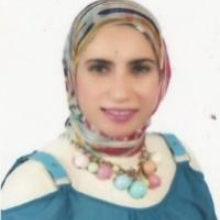
Fatty M. Salem received her B.Sc. degree in Electronics, Communications and Computers Engineering from Capital University (formerly Helwan University), Cairo, Egypt, in 2007. She received her M.Sc. and PhD degree in network security from Capital University (formerly Helwan University), in 2010 and 2014 respectively. Currently, she is a Professor in the faculty of Computing and Information Sciences, Egypt University of Informatics. Egypt. Her research interests include authentication, privacy, access control, applied cryptography, blockchain, Bitcoin, mobile security, and the security of medical images. More specifically, she is working on the design of efficient and secure cryptographic algorithms and protocols.
By Shimaa Sayed Mohamed Marwa M. A. Hadhoud Fatty M. Salem
DOI: https://doi.org/10.5815/ijcnis.2026.05.03, Pub. Date: 8 Oct. 2026
Secure and efficient transmission of medical images requires integrating compression, encryption, and substitution mechanisms to protect sensitive patient data. Compression reduces image size, improving transmission and storage while preserving diagnostic quality. Encryption ensures confidentiality and the Health Insurance Portability and Accountability Act (HIPAA) compliance, safeguarding patient information from unauthorized access. Nonlinear substitution using dynamic S-boxes increases confusion and strengthens resistance to cryptanalysis. This paper presents a hybrid medical image encryption scheme comprising three sequential stages for high security and computational efficiency. In preprocessing, images are resized, normalized, partitioned into uniform blocks, and compressed using compressive sensing based on partial discrete Fourier transform sampling. The encryption stage applies adaptive S-boxes with block interleaving, followed by the Advanced Encryption Standard in Galois/Counter Mode to provide integrity-preserving encryption. During decryption, the Fast Iterative Shrinkage-Threshold Algorithm reconstructs images accurately. Experimental results demonstrate that the scheme preserves image quality, achieves effective compression, and resists statistical and cryptographic attacks, making it suitable for secure medical image communication in resource-limited environments.
[...] Read more.Subscribe to receive issue release notifications and newsletters from MECS Press journals