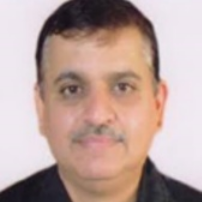
Work place: School of Computer Science KBC North Maharashtra University, Jalgaon, Maharashtra 425001, India
E-mail: rpbhavsar@nmu.ac.in
Website:
Research Interests: Machine Learning
Biography
R. P. Bhavsar completed his B.C.S. degree from Pune University in 1992, followed by an MCA in 1995 from Kavayitri Bahinabai Chaudhari North Maharashtra University, Jalgaon. He received his Ph.D. in Computer Science from the same university in 2016. He has varied experience of 28 years which includes 03 years as Scientist at C-DAC (Pune), 07 years as System Analyst, 18 years of teaching. Currently, he is working as Professor in School of Computer Sciences, Kavayitri Bahinabai Chaudhari North Maharashtra University, Jalgaon. His research focuses on Machine Translation, Applied Natural Language Processing, Capacity Building, Machine Learning, IT and Networking infrastructure setup, and software development projects. Currently, he is supervising the research work of 04 Ph.D. scholars.
By Swati Prakash Sonawane Kavita Tukaram Patil R. P. Bhavsar B. V. Pawar
DOI: https://doi.org/10.5815/ijitcs.2026.03.02, Pub. Date: 8 Jun. 2026
Part-of-Speech (POS) tagging is an essential and important pre-processing activity for many Natural Language Processing (NLP) applications, this is particularly more evident for morphologically rich languages such as Marathi. This research investigates POS tagging for Marathi using the Maximum Entropy Markov Model (MEMM). MEMM combines the strengths of conditional probability modelling and sequence prediction, allowing the integration of rich contextual features. Features used include word forms, suffixes, prefixes, and neighboring tags, effectively tackling the challenges presented by inflectional variations and ambiguity in Marathi. Experimental results demonstrate that the MEMM-based POS tagger achieves an accuracy of 83.72%. This performance marks a notable advancement in Marathi POS tagging, given the linguistic diversity and the scarcity of annotated data. Error analysis enhances the issues like ambiguity in homonyms and out-of-vocabulary words, providing methods for further improvement through enriched datasets and sophisticated modelling techniques. This study enhances NLP applications such as machine translation, spell checking, and sentiment analysis for Indian languages and offers a solid foundation for future research in Marathi POS tagging.
[...] Read more.Subscribe to receive issue release notifications and newsletters from MECS Press journals