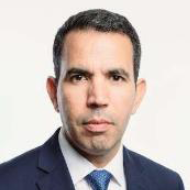
Mohamed Ouhda

Work place: TIAD Laboratory, Departement of Computer and Mathematics, Higher School of Technology, khenifra, Morocco

E-mail: ouhda.med@gmail.com

Website: https://orcid.org/0000-0003-1615-367X

Research Interests:

Biography

Mohamed Ouhda was born on January 20, 1980, in Tismoumine, Morocco. He holds a Baccalaureate in Mathematical Sciences, a Master’s degree in Computer Science, a Master’s degree in Software Quality, and a PhD in Computer Science. He began his teaching career in 2006 as a high school teacher, then at the Preparatory Cycle for Engineering Schools, followed by a position at the Regional Center for Education and Training Professions. He is currently a Professor at the Higher School of Technology at Sultan Moulay Slimane University. Professor Ouhda’s research focuses on computer vision and deep learning, with particular emphasis on image processing, pattern recognition, and artificial intelligence applications in real-world systems. He has published numerous scientific articles on topics such as automatic fruit detection and maturity analysis using deep learning, biomedical image classification and detection, trajectory planning for robotics, and speech emotion recognition using neural network models. His work integrates advanced machine learning techniques with practical applications in image analysis and intelligent systems. In addition to his academic duties, he participates actively in research projects within the TIAD Laboratory (Information Processing and Decision Support), contributing to the advancement of applied computer science in Morocco.
Author Articles
Image Denoising in the Contourlet Domain Using RBF Network and Kalman Filter

By Rachid Benoudi Youssef Qaraai Mohamed Ouhda

DOI: https://doi.org/10.5815/ijigsp.2026.02.05, Pub. Date: 8 Apr. 2026

Image denoising remains a fundamental challenge in image processing, particularly when dealing with additive white gaussian noise (AWGN) that degrades visual quality and information content. This paper introduces a novel multi-stage denoising framework that uniquely combines Contourlet transform, radial basis function neural networks (RBFNN), and kalman filtering to effectively preserve important image features while removing noise. The contourlet transform first decomposes images into multi-resolution, directional subbands, providing a sparse representation that better captures geometric structures compared to traditional wavelet approaches. We then employ an RBFNN trained through back-propagation to adaptively threshold the contourlet coefficients based on local image characteristics and noise levels. Finally, kalman filtering is applied as a post-processing step to further suppress residual noise artifacts. Comprehensive experiments conducted on standard benchmark datasets demonstrate that our approach outperforms several state-of-the-art methods, including BM3D and recent deep learning-based techniques, particularly at moderate to high noise levels (σ ≥ 15). Quantitative evaluations show our method achieves superior PSNR improvements of up to 2.4dB and SSIM improvements of 0.12 compared to recent competing approaches, while qualitative results confirm better preservation of edges and textural details. The proposed framework offers an effective balance between computational efficiency and denoising performance, making it suitable for various practical applications.

[...] Read more.
Other Articles