Work place: Université Joseph KI-ZERBO, Ouagadougou, Burkina Faso
E-mail: kisitokab@gmail.com
Website:
Research Interests:
Biography
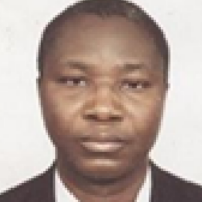
Kiswendisida K. Kaboré is an academic and researcher with extensive expertise in computer science, artificial intelligence and e-earning systems. He received his Ph.D. in Computer Science from Joseph KI-ZERBO University (UJKZ) in 2018. His doctoral research focused on advanced computing techniques, contributing to significant advancements in artificial intelligence applications. Since 2006, Dr. Kabore has been a faculty mem- ber at UJKZ where he currently serves as the Head of the Computer Science Department. His academic journey is enriched by a diverse set of qualifications. He holds a Master of Specialization in E-Learning from the Institute Universitaire Kurt Bosch, Switzerland (2007), a Master’s in Multimedia and Internet Information Systems from the University of Amiens, France (2006), a Bachelor’s in Computer Programming Analysis from the Univer- sity of Ouagadougou (1996). He is an active member of the Laboratoire de Mathematiques et d’Informatique (LAMI) and contributes to the research teams on Artificial Intelligence, Data Mining, and Applications, as well as Information Systems and Knowledge Engineering. His research focuses on Information Retrieval, Recommendation Systems, and Artificial Intelligence Applications. Over his career, Dr. Kabore has received numerous distinctions, including being named Chevalier de l’ordre des Arts, Lettres et Communication in 2022 for his contributions to the field of information and communication technologies.
By Flavien H. Somda Desire Guel Kisito K. Kabore Antoine Schorgen
DOI: https://doi.org/10.5815/ijisa.2026.02.12, Pub. Date: 8 Apr. 2026
This paper introduces a novel reference model for intelligent longitudinal vehicle control, designed to enhance both safety and passenger comfort. The proposed model dynamically adjusts the follower vehicle’s acceleration based on its penetration distance relative to the lead vehicle, ensuring smooth speed transitions and adaptive deceleration. By preventing abrupt braking, the model maintains a safe inter-vehicle distance while reducing passenger discomfort. Key contributions include an analytical derivation of the follower vehicle’s dynamics and a novel formulation of the safety distance using the Lambert W function, enabling precise parameter optimization. A dedicated optimization framework ensures compliance with safety constraints while minimizing excessive acceleration and jerk. The model’s performance is validated through numerical simulations in various driving scenarios, including emergency braking, steady-speed following, variable-speed adaptation, and stop-and-go traffic. Results demonstrate its effectiveness in maintaining safety while enhancing ride comfort through gradual and controlled deceleration. The proposed approach is computationally efficient and well-suited for Advanced Driver Assistance Systems (ADAS) and autonomous vehicles. Future research will explore its integration with lateral control strategies, real-time adaptability, and machine learning techniques for further performance optimization in dynamic driving environments.
[...] Read more.Subscribe to receive issue release notifications and newsletters from MECS Press journals