Work place: Department of Internet of Things and Robotics Engineering, University of Frontier Technology, Bangladesh, Kaliakair, Gazipur-1750, Dhaka, Bangladesh
E-mail: 1901021@iot.uftb.ac.bd
Website: https://orcid.org/0009-0003-0211-0190
Research Interests:
Biography
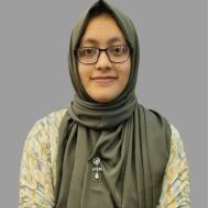
Marshia Muntaka is a recent graduate from University of Frontier Technology, Bangladesh, where she earned her B.Sc. in IoT and Robotics Engineering. She is passionate about the convergence of technology and innovation, with a focus on web development, machine learning (ML), artificial intelligence (AI), and their applications in addressing real-world challenges. Marshia actively participated in a number of practical IoT projects during her academic career, applying her abilities to the design and implementation of intelligent systems. She used AI-driven decision-making, embedded systems, and hardware integration in her work to develop effective and long-lasting solutions. Curiosity and a dedication to developing new technologies are what motivate Marshia, who is excited to use her experience to advance robotics, artificial intelligence, and the Internet of Things.
By Arifa Azmary Marshia Muntaka Atiqur Rahman Md. Toukir Ahmed
DOI: https://doi.org/10.5815/ijieeb.2026.02.09, Pub. Date: 8 Apr. 2026
In recent years, the rapid advancement of machine learning (ML) has surpassed many expectations, and its application in the healthcare sector has emerged as one of the most fascinating areas of exploration. This thesis looks into whether machine learning can increase the precision and efficacy of breast cancer diagnosis. With the help of nine classification algorithms including Random Forest, XGBoost and MLP Classifier the given work intends to propose a reliable automatic solution for malignant and benign classification of breast tumor. The main idea of the project is the development of the Web based tool that would allow doctors and other medical practitioners to make quick decisions The MLP Classifier was found to be the optimal solution after its efficiency was evaluated based on the accuracy rate, and such parameters as precision rate, recall rate, and F1-score. This leads to development of a user friendly app; even those that would not originally consider themselves technical can easily operate the application. Apart from addressing the matter of high accuracy of diagnostics, the system shows the possibility of minimizing the rates of human factors and optimizing clinical decision. Seeking for that day when technology and human opinion will complement each other in the delivery of healthcare, our study neither only contributes to the growing literature on applying artificial intelligence in healthcare but also evolves the blueprint to integrate ML models in everyday practice.
[...] Read more.Subscribe to receive issue release notifications and newsletters from MECS Press journals