Work place: Research Laboratory on Intelligent Systems (LARESI), Electronics Department, University of Science and Technology of Oran Mohamed-Boudiaf USTOMB, El Mnaouar, BP 1505, Bir El Dir 31000, Oran, Algeria
E-mail: lila.meddeber@univ-usto.dz
Website: https://orcid.org/0000-0001-6286-7986
Research Interests:
Biography
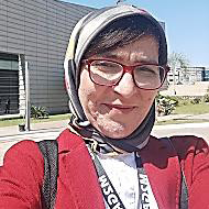
Lila Meddeber received the Engineering degree in Computer Science and the Magister degree from the University of Science and Technology of Oran (USTO), Oran, Algeria. She received the Ph.D. degree in Vision and Pattern Recognition in 2014. She is currently an Associate Professor with the Department of Electronics, USTO, where she also serves as the Director of the Intelligent Systems Research Laboratory. Her teaching activities include object-oriented programming languages, information theory, web technology, image processing, medical informatics and pattern recognition. Her research interests include pattern recognition, artificial intelligence, deep learning, medical image analysis, remote sensing, and geographic information systems.
By Mohamed El Mehdi Imam Lila Meddeber Tarik Zouagui
DOI: https://doi.org/10.5815/ijigsp.2026.01.04, Pub. Date: 8 Feb. 2026
Automated road network extraction from satellite imagery represents a critical advancement for Geographic Information Systems (GIS) applications in infrastructure management and urban planning. This paper introduces two novel deep learning architectures based on LinkNet: RoadNet-MS (Multi-Scale) and RoadNet-AUX (Multi-Scale with Auxiliary Supervision), specifically designed to enhance road segmentation performance. RoadNet-MS incorporates Multi-Scale Contextual Blocks (CMS-Blocks) and hybrid blocks to effectively capture diverse contextual features at multiple scales, achieving F1-scores of 78.87% on the challenging DeepGlobe dataset and 82.30% on the Boston & Los Angeles dataset. RoadNet-AUX extends this architecture through auxiliary supervision, further improving performance with F1-scores of 79.14% on DeepGlobe and 82.33% on Boston-LA. Both proposed architectures demonstrate competitive performance and consistent improvements over existing methods, including the state-of-the-art NL-LinkNet, across both evaluation datasets. Notably, RoadNet-MS achieves the highest precision (83.55%) among all compared methods on DeepGlobe. These contributions provide a pathway toward more accurate and scalable road network mapping, essential for modern urban planning and infrastructure monitoring applications.
[...] Read more.Subscribe to receive issue release notifications and newsletters from MECS Press journals