Najah Ghmaid

Work place: Department of Computer Science, Faculty of Science, Sebha University, Sebha Libya

E-mail: naj.ghumeid@sebhau.edu.ly

Website:

Research Interests:

Biography

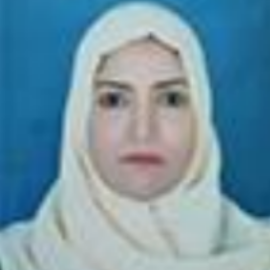
Najah Ghumeid was born in Sebha, southern Libya, in 1985. She received the B.S. degree in computer science from the faculty of sciences, Sebha University, Libya, in 2008. She is currently a lecturer and M.S. candidate in artificial intelligence and machine learning at the College of Information Technology, Sebha University, with an expected degree completion in 2025. She co-authored the paper “Addressing the Libyan Arabic Dialect Identification: A Comparative Study of Ensemble Classification Methods” (Tripoli, Libya, IEEE-MI-STA 4th, 2024). Professionally, she serves as an accredited trainer at Sebha University’s Training and Development Centre, specializing in programs such as IC³, ICDL, MOS, and TOT. She has over 10 years of experience designing and accrediting IT training curricula, including foundational contributions to the Centre’s inaugural programs in 2016. Previously, she led the implementation of the university’s staff classification system (2016) and served on its Financial Entitlements Committee (2019). Her research focuses on natural language processing (NLP) and artificial intelligence (AI) systems. Ms. Ghumeid holds certifications as a Microsoft Office Specialist (MOS, Certiport, 2013), IC³ Global Standard 4 Instructor (Certiport, 2010), ICDL Master Instructor (2013), and Trainer of Trainers (TOT, American Canadian Board, 2016).
Author Articles
Computational Linguistics Meets Libyan Dialect: A Study on Dialect Identification

By Mansour Essgaer Khamis Massud Rabia Al Mamlook Najah Ghmaid

DOI: https://doi.org/10.5815/ijisa.2025.06.09, Pub. Date: 8 Dec. 2025

This study investigates logistic regression, linear support vector machine, multinomial Naive Bayes, and Bernoulli Naive Bayes for classifying Libyan dialect utterances gathered from Twitter. The dataset used is the QADI corpus, which consists of 540,000 sentences across 18 Arabic dialects. Preprocessing challenges include handling inconsistent orthographic variations and non-standard spellings typical of the Libyan dialect. The chi-square analysis revealed that certain features, such as email mentions and emotion indicators, were not significantly associated with dialect classification and were thus excluded from further analysis. Two main experiments were conducted: (1) evaluating the significance of meta-features extracted from the corpus using the chi-square test and (2) assessing classifier performance using different word and character n-gram representations. The classification experiments showed that Multinomial Naive Bayes (MNB) achieved the highest accuracy of 85.89% and an F1-score of 0.85741 when using a (1,2) word n-gram and (1,5) character n-gram representation. In contrast, Logistic Regression and Linear SVM exhibited slightly lower performance, with maximum accuracies of 84.41% and 84.73%, respectively. Additional evaluation metrics, including log loss, Cohen’s kappa, and Matthew’s correlation coefficient, further supported the effectiveness of MNB in this task. The results indicate that carefully selected n-gram representations and classification models play a crucial role in improving the accuracy of Libyan dialect identification. This study provides empirical benchmarks and insights for future research in Arabic dialect NLP applications.

[...] Read more.
Other Articles