Work place: Department of Information and Communication Engineering, Noakhali Science and Technology University, Bangladesh
E-mail: masudur@nstu.edu.bd
Website: https://orcid.org/0009-0008-6927-7418
Research Interests: Human-Computer Interaction, Medical Image Computing, Data Mining, Learning Analytics
Biography
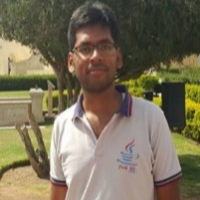
Md. Masudur Rahman, PhD, studied Computer Science Engineering and was employed by JASSO as a post- doctoral researcher at Kanagawa University in Japan in 2024. He obtained his Ph.D. from Kanagawa University, Japan, in 2023 under the supervision of Professor Minoru Yoshida, with a Japanese Government Scholarship (MEXT scholarship). Throughout his doctoral studies, Dr. Rahman collaborated with esteemed scholars, in- cluding Professor Hidetoshi Oya at Tokyo City University, Professor Shuji Kawasaki at Iwate University, and Professor Sergio Albeverio at Bonn University in Germany. Presently, Dr. Rahman is a faculty member in the Department of Information and Communication Engineering at Noakhali Science and Technology University. He has made significant contributions to both academia and the software industry. He served as a faculty member in the Computer Science and Engineering Department at Uttara University in Bangladesh, where he shared his expertise and knowledge, and has also worked professionally as a software engineer in the industry. His research interests encompass Code Smell Detection, System Design, Human–Computer Interaction, Human Healthcare Development, Medical Image and Signal Processing, Data Mining, Learning Analytics, Explainable AI for Feedback, and Software Clustering and Testing.
By Bristy Chakraborty Md. Masudur Rahman Apurba Adhikary Minoru W. Yoshida
DOI: https://doi.org/10.5815/ijem.2026.03.02, Pub. Date: 8 Jun. 2026
Bangla Sign Language is a unique sign language. Due to a lack of interpreters, the hearing- and speech- impaired community face challenges while communicating with the broader community. Recent studies have been con- ducted to reduce the gap between these two communities. But most of the researchers used a dataset with a controlled environment. We know the performance of a system highly depends on dataset quality. In this paper, we have created a new dataset, “BanglaSignSet” including 46 unique signs with over 10k images. We have carefully annotated and labeled the images using Roboflow. Our proposed dataset, “BanglaSignSet” consists of images with high resolution, good qual- ity, and adequate variation in environment and person. The constructed dataset has been trained using the most recent deep learning model, such as YOLOv8. We have also implemented different versions of the YOLOv8 model, such as YOLOv8n, YOLOv8s, and YOLOv8m. Additionally, we evaluated EfficientNet-B0 as a classification-based baseline to broaden the experimental comparison. The performance of models has been measured using different evaluation metrics such as mAP, precision, recall, and f1 score. A comparative analysis has been conducted based on the performance of the model. By comparative analysis we found a well-suited model, YOLOv8n, to deploy into a web-based application. To find the suitable model to deploy, we have considered factors such as memory requirement and inference speed. We have integrated the YOLOv8n model into a web application using the Python language. We have also tested the web application on Android devices and laptops. The web application detects signs from image input successfully.
[...] Read more.By Md. Masudur Rahman Md. Rayhanur Rahman B M Mainul Hossain
DOI: https://doi.org/10.5815/ijitcs.2017.06.05, Pub. Date: 8 Jun. 2017
Placement of methods within classes is one of the most important design activities for any object oriented application to optimize software modularization. To enhance interactions among modularized components, recommendation of move method refactorings plays a significant role through grouping similar behaviors of methods. It is also used as a refactoring technique of feature envy code smell by placing methods into correct classes from incorrect ones. Due to this code smell and inefficient modularization, an application will be tightly coupled and loosely cohesive which reflect poor design. Hence development and maintenance effort, time and cost will be increased. Existing techniques deals with only non-static methods for refactoring the code smell and so are not generalized for all types of methods (static and non-static). This paper proposes an approach which recommends 'move method' refactoring to remove the code smell as well as enrich modularization. The approach is based on conceptual similarity (which can be referred as similar behavior of methods) between a source method and methods of target classes of an application. The conceptual similarity relies on both static and non-static entities (method calls and used attributes) which differ the paper from others. In addition, it compares the similarity of used entities by the source method with used entities by methods in probable target classes. The results of a preliminary empirical evaluation indicate that the proposed approach provides better results with average precision of 65% and recall of 63% after running it on five well-known open projects than JDeodorant tool (a popular eclipse plugin for refactorings).
[...] Read more.Subscribe to receive issue release notifications and newsletters from MECS Press journals