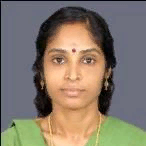
Work place: Division of Electronics Engineering, School of Engineering, Cochin University of Science and Technology, Kochi-682022.Kerala.India
E-mail: deepasankar@cusat.ac.in
Website:
Research Interests: Image Processing, Image Manipulation, Pattern Recognition, Computer systems and computational processes
Biography
Deepa Sankar is working as an Associate Professor in the Division of Electronics Engineering, SOE, Cochin University of Science and Technology, Kerala, India. Her research interests are image processing, fractals and pattern recognition. She has published papers in various international journals and conferences.
DOI: https://doi.org/10.5815/ijigsp.2026.05.10, Pub. Date: 8 Oct. 2026
This paper presents Block-Based Compressive Sensing (BCS) of images using both traditional and learning-based approaches. An Image Block Mapping Lemma, formulated as a modified version of the Johnson-Lindenstrauss Lemma for image data, is proposed in this work, which justifies distance preservation between image blocks during mapping from the original domain to the compressed domain in block-based compressive sensing. The paper provides both theoretical proof and experimental validation of the proposed lemma. To quantitatively analyse distance preservation between image blocks in the original and compressed domains during block-based compressive sensing using traditional approaches, a new metric termed Distance Ratio (DR) is introduced. The difficulty of obtaining accurate real-time reconstruction using conventional block-based compressive sensing methods has encouraged the transition toward adaptive deep learning approaches. For learning-based sensing and reconstruction, the existing AutoBCS framework is enhanced by introducing an Initial Reconstruction Refinement Network (IRR-Net) between the initial and final reconstruction stages. Using the proposed model, improved reconstruction quality is achieved, with average PSNR gains of 0.69-1.62 dB and SSIM improvements of 0.01-0.02 for sampling rates of 0.30, 0.25, 0.10, and 0.04 across multiple benchmark datasets compared with the baseline architecture. The proposed model introduces an additional 0.05 million parameters and increases the computational cost by 3.64 GFLOPs due to the residual refinement module, while reducing the reconstruction time compared with the baseline AutoBCS framework. Experimental results demonstrate that the proposed model exhibits improved preservation of complex structures, edges, and fine details, particularly for images containing rich textures, dense structures, and high-frequency content.
[...] Read more.DOI: https://doi.org/10.5815/ijigsp.2016.10.02, Pub. Date: 8 Oct. 2016
Eye blink detection has gained a lot of interest in recent years in the field of Human Computer Interaction (HCI). Research is being conducted all over the world for developing new Natural User Interfaces (NUI) that uses eye blinks as an input. This paper presents a comparison of five non-intrusive methods for eye blink detection for low resolution eye images using different features like mean intensity, Fisher faces and Histogram of Oriented Gradients (HOG) and classifiers like Support Vector Machines (SVM) and Artificial neural network (ANN). A comparative study is performed by varying the number of training images and in uncontrolled lighting conditions with low resolution eye images. The results show that HOG features combined with SVM classifier outperforms all other methods with an accuracy of 85.62% when tested on images taken from a totally unknown dataset.
[...] Read more.By Deepa Sankar Tessamma Thomas
DOI: https://doi.org/10.5815/ijigsp.2016.03.05, Pub. Date: 8 Mar. 2016
Modern life style of women has made them more vulnerable to breast cancer and it is considered as the largest cause of mortality among women. This paper presents a novel method to classify mammograms into normal ones, with benign and malignant microcalcifications, and with malignant and benign tumors using fractal features derived from fractal dimension. Here, three fractal dimension estimation methods such as Differential Box Counting (DBC), Triangular Prism Surface Area (TPSA) and Blanket methods are used for computing the six fractal features utilized for the classification. The new fractal feature f6 obtained using TPSA method is found to be the best with 100% classification accuracy. The average value of f6 is found to be 0.1110, 0.2875, 0.4743, 0.5271 and 0.8558, for normal, benign masses, benign and malignant microcalcifications and malignant masses respectively. The classification performance of the different features was analyzed using the Receiver Operating Characteristics (ROC).
[...] Read more.Subscribe to receive issue release notifications and newsletters from MECS Press journals