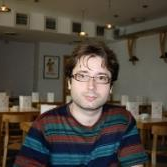
Razvan Bocu
Work place: Transilvania University of Brasov, Romania, Brasov, 500036
E-mail: razvan.bocu@unitbv.ro
Website: https://orcid.org/0000-0001-6577-1904
Research Interests: Theoretical Computer Science, Applied computer science, Computer Science & Information Technology
Biography
Dr. Razvan Bocu is PhD in Computer Science (National University of Ireland, Cork, 2010), MSc in Computer Science (Transilvania University of Brasov, 2006), BSc in Computer Science (Transilvania University of Brasov, 2005), BSc in Sociology (Transilvania University of Brasov, 2007).
Author Articles
AuthProtect: An Incremental Learning Framework for Android Malware Detection via Permission-Exploitation Mapping
DOI: https://doi.org/10.5815/ijem.2026.04.23, Pub. Date: 8 Aug. 2026
Android's widespread adoption and open ecosystem make it a primary target for malware, a challenge exacerbated by internet fragmentation resulting in non-stationary data distributions across regions. This work presents AuthProtect, a scalable malware detection framework based on incremental learning and a novel permission-to-exploitation mapping approach that links 135 permissions to 25 malware development techniques. The system is validated on a balanced dataset of 82,704 benign and 82,704 malicious applications, partitioned into three geographic regions to assess robustness to distribution shifts. A similarity-based selective training strategy improves computational efficiency by training only on novel samples (cosine similarity < threshold τ), while a test-then-train mechanism enhances robustness by sequentially processing samples to avoid data exposure bias. Evaluation on four benchmark datasets (Naticusdroid, Malgenome, CICMalDroid 2020, Android Malware Dataset) demonstrates accuracy ranging from 0.9573 to 0.9992, with a maximum accuracy of 0.9982 on real-world data. We provide a comparative analysis against state-of-the-art methods and ablation studies quantifying the contribution of each component. Limitations include dependency on the completeness of permission-technique mapping and computational overhead for real-time deployment on resource-constrained devices.
[...] Read more.A Novel Verkle Tree-based Post-quantum Digital Signature System with Enhanced Random Number Generation
By Maksim Iavich Tamari Kuchukhidze Razvan Bocu
DOI: https://doi.org/10.5815/ijcnis.2025.04.02, Pub. Date: 8 Aug. 2025
The security of public key cryptosystems has become a major concern due to recent developments in the field of quantum computing. Despite efforts to enhance defenses against quantum attacks, current methods are impractical due to safety and efficacy concerns. A recent study explores hash-based digital signature methods and evaluates their effectiveness using Merkle trees. Furthermore, novel approaches based on Verkle trees and vector commitments have been studied to reduce quantum threats.
First, we introduce a post-quantum digital signature system that combines vector commitments based on lattices with Verkle trees. This architecture optimizes traditional Merkle tree architecture by preserving resistance to quantum attacks while improving cryptographic proofs. Second, in order to ensure secure initial seed generation without sacrificing operational viability, we create a hybrid random number generation framework that combines quantum random number generation (QRNG) with pseudorandom approaches. We provide a detailed analysis of generating random numbers in our article, which makes it easier to build a post quantum cryptosystem that uses our generator to provide initial random values. Our system is notable for its robust security against quantum threats, speed, and efficiency.
Novel Quantum Random Number Generator with the Improved Certification Method
By Maksim Iavich Tamari Kuchukhidze Giorgi Iashvili Sergiy Gnatyuk Razvan Bocu
DOI: https://doi.org/10.5815/ijmsc.2021.03.05, Pub. Date: 8 Aug. 2021
Random numbers play an important role in many areas, for example, encryption, cryptography, static analysis, simulations. It is also a fundamental resource in science and engineering. There are algorithmically generated numbers that are similar to random distributions, but are not actually random, called pseudo random number generators. In many cases the tasks to be solved are based on the unpredictability of random numbers, which cannot be guaranteed in the case of pseudo random number generators, true randomness is required. In such situations, we use real random number generators whose source of randomness is unpredictable random events.
Quantum Random Number Generators (QRNGs) generate real random numbers based on the inherent randomness of quantum measurements. Our goal is to generate fast random numbers at a lower cost. At the same time, a high level of randomness is essential.
Through quantum mechanics, we can obtain true numbers using the unpredictable behavior of a photon, which is the basis of many modern cryptographic protocols. It is essential to trust cryptographic random number generators to generate only true random numbers. This is why certification methods are needed which will check both the operation of the device and the quality of the random bits generated.
We present the improved novel quantum random number generator, which is based the on time of arrival QRNG. It uses the simple version of the detectors with few requirements. The novel QRNG produces more than one random bit per each photon detection. It is rather efficient and has a high level of randomness.
Self-testing as well as device independent quantum random number generation methods are analyzed. The advantages and disadvantages of both methods are identified. The model of a novel semi self-testing certification method for quantum random number generators (QRNG) is offered in the paper. This method combines different types of certification approaches and is rather secure and efficient. Finally, the novel certification method is integrated into the model of the new quantum random number generator. The paper analyzes its security and efficiency.
Other Articles
Subscribe to receive issue release notifications and newsletters from MECS Press journals